Alright, so you remember those flicks where people stare really hard at a screen, a door, or whatever, and boom! It obeys? It used to feel like pure Hollywood, right? Not anymore! Brain-computer interfaces (BCI) are kicking down the sci-fi door and bringing it to real life. It's not just scientists in white coats poking at rats anymore. We're talking actual people, actual thoughts making stuff happen. Sounds crazy? Read on!
From quiet lab rat stuff to full-on superpower vibes
Elon Musk has always been interested in the future of humanity and technology, especially in AI (Artificial Intelligence). Around 2015–2016, he started worrying that super-intelligent AI could become so powerful that humans might not be able to keep up. To solve this, Musk came up with the idea of merging humans with AI by connecting our brains directly to computers. That way, instead of competing with AI, we could team up with it. So in 2016, he quietly started Neuralink, a company focused on building Brain-Computer Interfaces (BCIs)- tiny devices that let your brain talk directly to machines. Next thing you know, Elon Musk’s Neuralink goes all-in, and suddenly, everyone’s talking about brain chips like it's the next iPhone. Imagine being stuck in your own body, unable to scratch your nose, and then magic! You can scroll reels just by thinking. That’s what Neuralink is promising for people with severe paralysis. Not lying; that’s kinda amazing.
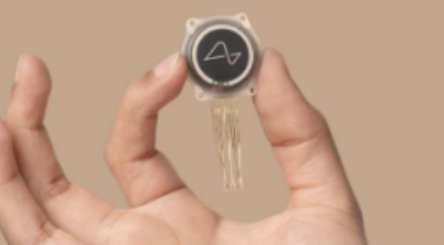
And the speed of all this? It's unbelievable. In January 2024, Neuralink put their Telepathy device into someone’s brain. By February, that person was already moving a computer mouse using just their mind. Then, in March, Noland Arbaugh, a 29-year-old with quadriplegia, played online chess and listened to music just by thinking.
Initially, there were some problems with the hardware, but they were soon solved, and clinical trials continued with Alex, the second person to receive Telepathy. He’s doing 3D design and playing video games with his brain like it’s no big deal.
It’s like watching a superhero movie, but it’s real.
How does this even happen?
How does your brain talk to a computer with Neuralink?
- Your brain sends signals
- Neuralink listens In
- Electrodes pick up brain activity
- Signals get translated
- You control stuff with your mind
Your brain is full of neurons (tiny cells that send messages).
They talk to each other using electric signals every time you think, move, or feel something.
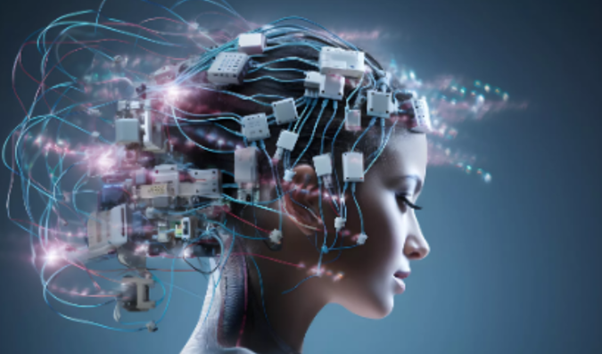
Neuralink uses a robot to insert tiny threads (thinner than a hair) into the part of your brain that controls movement or thinking.
Each thread has electrodes, little sensors that pick up the electric signals from your neurons (kind of like a microphone for your thoughts).
These brain signals are sent to a chip in your head, which translates your thoughts into computer commands.
Now, when you think about moving a mouse or typing something, the computer understands that and does it with no hands needed.
Sure, Musk gets all the headlines, but the BCI is way bigger than you think. Scientists like Miguel Nicolelis at Duke University have been at this for ages— monkeys were moving cursors with their brains back in 2002.
Now? The BCI wish list
- Making paralysed people move robot arms or even walk with exoskeletons (robotic suits).
- Giving a voice to people who’ve basically been locked in their own bodies forever.
- Maybe even fixing brains— think of Parkinson’s, epilepsy, depression.
- Neuralink is working on Blindsight, hoping to give back some sight to people who are blind. That’s almost miraculous, honestly.
There’s always a catch.
It’s not all sunshine and telekinesis. Putting stuff into someone’s skull isn’t exactly a walk in the park. You can worry about infections and parts breaking. Your brain is constantly sending out lots of mixed, messy electrical signals. So, when trying to make sense of the brain’s messy signals and translate them into clear, usable commands for a computer, it's hard to understand exactly what each signal means.
And don’t get me started on the ethical stuff. Do you want someone hacking your thoughts? Didn’t think so. Privacy, autonomy, and other related issues pose many questions, with no easy answers. Plus, these gadgets are super expensive right now. It would be great if this technology (like BCI) were available to everyone, not just the super-rich or test subjects in labs.
The Revolution!
Clearly, we’re standing on the edge of something huge here. Neuralink’s human trials are just the tip of the iceberg. Honestly, it feels like tomorrow’s tech, but it’s happening now. There’s still a lot of stuff to figure out—safety and ethics, which have to be taken care of, but for the first time, mind over machine isn’t just a catchy headline. It’s real.